
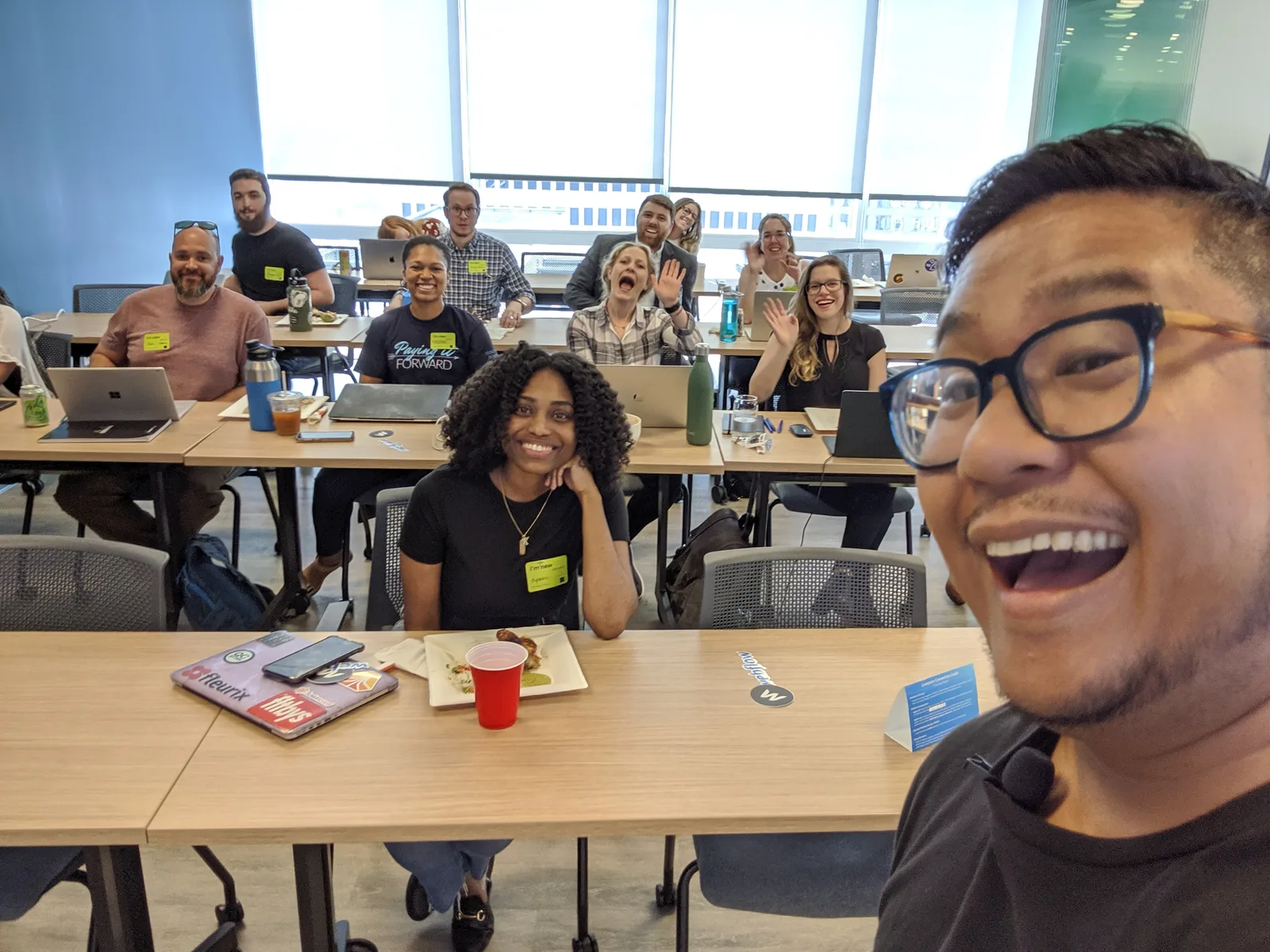
A presentation is where you try to look smart. A workshop is where you help *them* look smart. Most people plan for the first and wonder why the second one feels like a funeral for everyone's attention span.
How fast should a workshop get hands-on?
Don't start with the history of the internet. Start with a button that does something. If they haven't 'built' a tiny thing within the first quarter-hour, they've already decided they aren't 'tech people.' Confidence is a currency—spend it early.
The 'No One Left Behind' Rule
Every exercise needs a 'safety floor' and a 'cool ceiling.' A version for the person whose laptop is currently updating, and a version for the person who finished the whole thing while you were explaining it. That way, nobody is bored and nobody is drowning in stress.
Your goal as a facilitator isn't to be impressive. It’s to be completely unnecessary by the time the pizza arrives.
My 'Emergency Kit' for every room
The finished project, shown immediately so they know the destination.
Checkpoint files. If someone's code breaks, don't debug for 20 minutes—just give them the 'Working Version 2.0' file.
One big question on the whiteboard. Answer it together at the end to prove everyone learned something.
At the end, name what each person built. There’s no better feeling than walking out of a room where you actually *did* the thing instead of just watching someone else do it.