
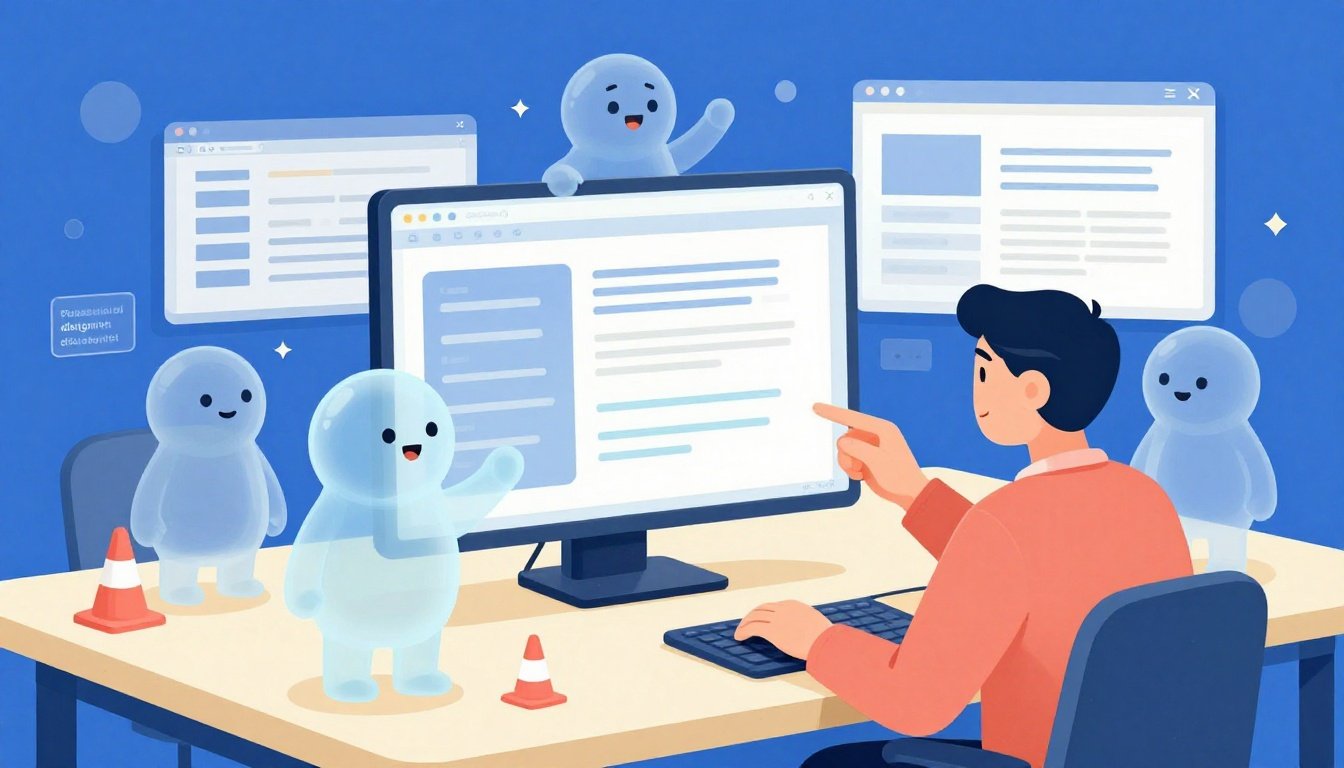
Webflow’s new Source is not merely another button that turns a sentence into a landing page. Announced on Sept. 2 at Webflow Conf 2026 in Boston, it puts marketing teams and AI agents in a shared workspace—and moves those agents closer to the code that runs the actual website.
That is a meaningful shift. The web has spent the last few years asking whether AI can make a page. Source asks a more operational question: can an agent work inside a real web stack without turning the brand into a haunted house?
Not another prompt box
According to CMSWire’s report, Source is an agentic workspace for building, optimizing, and scaling digital experiences. The important detail is architectural: it connects to existing codebases and martech stacks, giving AI agents direct access to site code rather than keeping them behind a visual abstraction layer.
Translation: the agent is no longer just suggesting a page from the other side of the glass. It can work in the same neighborhood as the page that ships. That is powerful—and also how you accidentally give a very enthusiastic intern the keys to production at 2:14 a.m.
The fence is the feature
Webflow’s answer to the 2:14 a.m. problem is governance. The company says brand standards, permissions, and business rules govern what actually ships. For a system with code access, those are not back-office paperwork; they are the design constraints that make speed usable.
Direct access without guardrails is just speedrunning a postmortem. Bounded autonomy is the more interesting promise: let an agent move quickly, but make the boundaries explicit enough that a human can understand what it was allowed to touch and why the result passed muster.
That is why agent visibility matters almost as much as agent capability. CMSWire reports that real-time agent activity tracking in site logs is rolling out this month. A log is not glamorous, but neither is debugging a mystery padding rule while a campaign countdown ticks.
The rollout has a calendar, not a magic wand
Source is currently a limited research preview, so this is a direction of travel rather than a finished verdict. The announcement also separates the surrounding capabilities by timing:
Agent collaboration and Webflow’s MCP updates are reported as rolling out this month. The MCP work includes GSAP interactions, expanded CMS access, and cloud deploy tooling.
Webflow Campaigns, with agent-assisted landing pages and HubSpot and Salesforce integration, is slated for the fall.
Brand-consistent image and video production powered by Webflow’s Vidoso acquisition is slated for early next year.
That sequencing is useful because it turns “AI is coming” into actual surfaces a team can evaluate. If a roadmap contains only the word soon, it may be a mood board wearing a lanyard.
What this means for web teams
The brief becomes system design. If an agent can reach code, a good brief needs more than a vibe and three adjectives. It needs the brand rules, permissions, integrations, and business logic that define a safe result.
Logs become part of the creative workflow. When a team can see what an agent changed, review becomes less like fortune-telling and more like editing. That makes experimentation easier to trust.
Visual and agentic work do not have to be rivals. Webflow’s own overview presents Source as a place to connect an existing stack, build agentically or visually, customize workspaces, and orchestrate always-on agents. The useful future is probably not humans versus agents; it is a shared system where each is good at a different kind of work.
Governance needs a user experience. Permissions and business rules only help if the people doing the work can understand and adjust them. The next design challenge is not just making agents more capable; it is making their boundaries legible.
The real signal
Source’s biggest signal is not that AI can write code. We already knew it could. The signal is that a major web platform is preparing to let agents work inside real production systems, with the same boring-but-essential fences humans have used for years.
Good. The web does not need more pages made in five seconds and abandoned for five months. It needs teams that can change a page quickly, see what changed, and keep the brand from wandering into the shrubbery. Give the agent a key, keep the door on its hinges, and leave the logs on.